 |
| Geography 5 Group Presentation Tropical Rain Forests-Costa Rica Kevin De la Torre, Claire Winter, Grady Howe, Arielle Schechtman |
Monday, December 1, 2014


Sunday, November 30, 2014

Saturday, November 29, 2014
Historical State
Tropical rain forests have been in existence for hundreds of millions of years. Most of them come from fragments of the supercontinent of Gondwana during the Mesozoic era which included most of the land masses in the southern hemisphere. Landmass separation destroyed much of the rain forests amphibian diversity while drier climate fostered an increase in reptile diversity.
In total, there were five regions of tropical rain forest that resulted from the division of landmasses. This includes tropical America, Africa, South East Asia, Madagascar, New Guinea, and small outliers in Australia. Incomplete fossil records make it difficult to gather specifics about the origin of the rainforest.
Friday, November 28, 2014
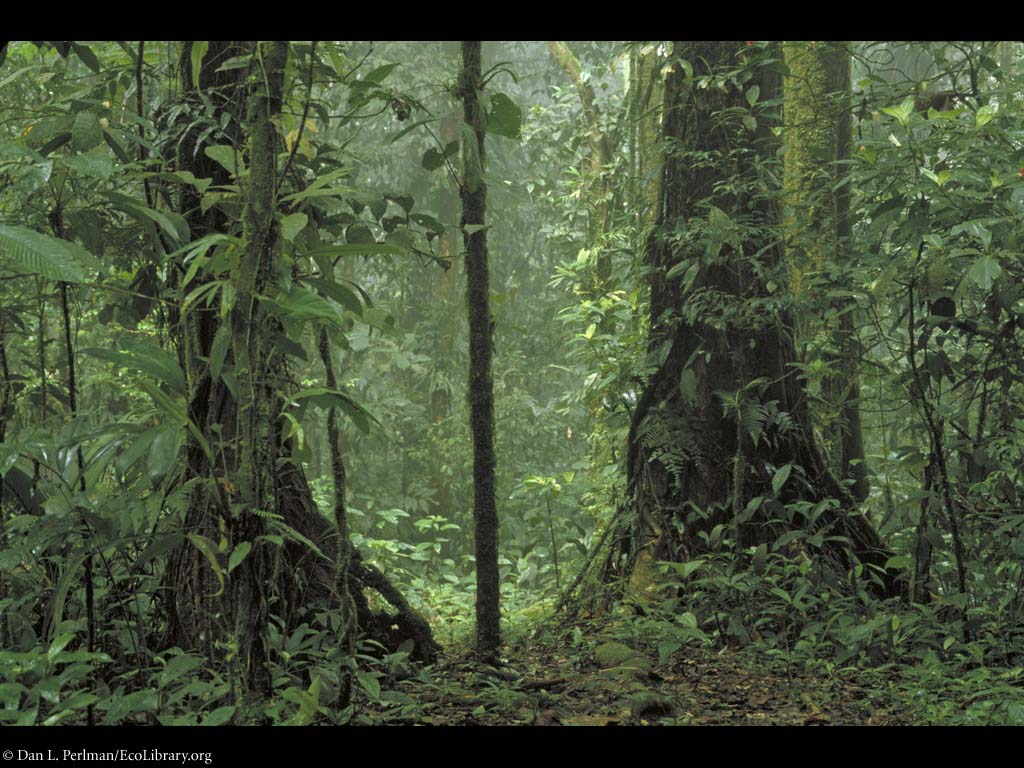


Current Human Impacts
Between the years of 1940 and 1983, the forest cover in Costa Rica decreased from over 75% to less than 26% (1). This extensive deforestation is largely attributed to the human population growth, and therefore a heightened need for agricultural land. In order to provide humans with lumber, farmland, and pastureland, large companies began clearcutting large plots of land. This destruction and deforestation removes what little nutrients the soil had to begin with, thus limiting the ability for the soil to support other plant life and creating almost impossible conditions for regrowth (2). Since the soil loses nutrients so rapidly, the farming of cash crops such as coffee, sugar cane, and Africanized palm, needed to constantly take over and exploit more land. Furthermore, the removal of vegetation causes an increased soil erosion during rainfall and windy conditions. Through the creation of large plantations, irrigation systems, and the use of toxic pesticides, the land was damaged even more. Destruction of the tropical rainforest limits biodiversity and destroys the homes, therefore killing many plants and animals (3).
In the late 20th and early 21st century the protection and reforestation of the tropical rainforests in Costa Rica has increased dramatically. With the rise of environmentalism and the increase in effective government policy, forest cover has increased to 52% and continues to rise. With the realization that economic growth and ecologic stability go hand in hand, the government created policies and financial incentives for every hectare of land conserved.The Payment for Environmental Services Program (PES) provides money for those who own property containing tropical rainforest plant life, thus conserving it. Additionally there are many programs seeing to the reduction of carbon emissions, and therefore the acceleration of reforestation (4).
1) Blasiak, Robert. "Ethics and Environmentalism: Costa Rica's Lesson." Our World: Brought to You by United Nations University. 7 Dec. 2011. Web. 24 Nov. 2014.
2) Pine, Devera. "The Effects of Humans." Scholastic News: Rain Forest. Grolier Incorporated, 22 Apr. 2002. Web. 26 Nov. 2014.
3) "The Tropical Rainforest." Biomes of the World. Marietta College Department of Biology and Environmental Science, 1 Jan. 2007. Web. 25 Nov. 2014.
4) "Reforestation: The Easiest Way to Combat Climate Change." United Nations Department of Economic and Social Affairs. UN. Web. 23 Nov. 2014.
http://unu.edu/publications/articles/ethics-and-environmentalism-costa-ricas-lesson.html
http://www.marietta.edu/~biol/biomes/troprain.htm
http://teacher.scholastic.com/scholasticnews/indepth/rainforest/effects.asp
Thursday, November 27, 2014
Future prospects
Costa Rica is one of the top countries in the world in
regards to protecting and conserving their rainforests. Costa Rica is
constantly saving unprotected rainforest land and adding on to the protected
land. As ecotourism becomes more popular the people will become more educated.
There is no surprise global warming will impact Costa Rica rainforests
negatively. The tropical rainforest species will become extremely vulnerable to
climate change because most live in constant shade and aren’t generally adapted
to the extreme high temperatures found in more open habitats. Global warming will also continue to
drastically affect the condition of rain forests. Rain forests have become more
vulnerable to droughts, which can cause severe wildfires destroying rainforests.
The government also has to take a stance and better monitor illegal activity
and step up to protect the unprotected land. Plants and trees need to be
planted where previous forests have been wiped out so species can come back to where
their habitats were threatened previously. Predictions for the future of
tropical rainforest species need to acknowledge the possibility of true
unpredictable surprising events.

Protected Area and Status
The Nature Conservancy is working hard to protect some of
Costa Rica’s most exotic tropical rain forest. In particular, they have begun a
project to protect the Osa Peninsula, where 400,000 acres of rain forest meet
the coast. In the past, this area was nicely shield from the outside world but
improved transportation and well as clearcutting and logging activities have
threatened the peninsula. The Nature Conservancy is looking to establish a
100,000 acre corridor between the Corcovado and Piedras Blancas through donations
to adopt an acre. In addition, the Nature Conservancy also wants to establish a
network of marine protected areas to aid the protection of fish and other
marine life.
Benefits of the Tropical Rain Forest
European colonists have destroyed more than 90 native Indian
tribes since the 1900s. With them, the world lost their vast array of knowledge
relating to the medicinal value of species within the rain forest. More
importantly, medicine men have been destroyed along with their skills. These
medicine men are highly trained and specialized in using these plants for
healing purposes. No other place in the world provides the knowledge and skills
of these medicine men. Furthermore, over half of all plants, insects, and
animals, as well as over 20% of the world’s oxygen come from the tropical rain
forest. It goes without saying that when tropical rain forests are clear-cut
for their timber, the planet loses a lot of diversity in wildlife that are
extremely beneficial, if not completely necessary, to humans. Prescription
drugs are also found in many of the plants from the tropical rain forest. In
fact, about 121 prescription drugs being sold throughout the world are found in
plants from the tropical rain forest. When forests are destroyed, pharmaceutical
companies no longer have the necessary ingredients to create these important
drugs.
Wednesday, November 26, 2014
Proactive Response to Negative Human Impacts
Population growth is imperative to the preservation of tropical rain forests because sustenance farming is very common in these types of environments. Unfortunately, such techniques cause the soil to erode after the areas have been cleared. With increased demand from population growth, new areas are constantly having to be cut out since the soil is not given a chance to recover as a result of these farming techniques. Logging is also very common in tropical rain forests because their wood is highly valued for the lumber industry. To stop this unhealthy trend, we could restrict logging to certain areas in the rain forest, which has already happened in Costa Rica. Over half of Costa Rica’s tropical rain forests are protected by national parks, wildlife refuges, or biological reserves.
Industrialized agriculture also causes major problems. Techniques used in industrialized agriculture could include slash and burn, monoculture, and introduction of harmful species of plants and/or animals. Unfortunately many of the forests are concentrated in the hands of the wealthy who benefit greatly from these kinds of techniques. So change can be difficult, but it is possible. Government programs can offer incentives to sustainably farmed tropical rain forests. Other countries can also follow Costa Rica’s example and allow their public programs to protect their rain forests, which would drastically reduce overfarming. Bamboo based technology has also become popular in places like Costa Rica, where governments have taken a proactive response to deforestation. This encourages the use of bamboo as primary building material to provide low cost housing places like Costa Rica that have many rural areas.
Thursday, November 20, 2014
Rainforest Data

This data set, created by our group, shows the amount of forest cover in Costa Rica from 1990 to 2010. You can see that unsustainable farming techniques led to a drastic dip from 1990 to 2000. But improved awareness, and proactive responses to human impacts have brought forest cover levels above where they were in 1990. Examples of such responses could be seen throughout our blog. For instance, the Nature Conservancy created the Osa Peninsula efforts to preserve the tropical rain forests that border its nicest beaches. The forest cover levels are measure in thousands of hectares. (Mongabay)

The tropical rain forest covers the regions shaded in green. Many Countries have taken different approaches to conservation of tropical rain forest cover. The following graphs give a good indication of how Costa Rica has emphasized the importance of sustainable farming and agriculture in the tropical rain forest. (www.mongabay.com)

This graph shows the amount of forest loss with each ecozone. As you can see, the tropical rainforest is by far the most highly targeted ecozone. The tropical rain forest provides good opportunity economic gain from sustenance farming, logging, and clear cutting. (www.mongabay.com)

This gaph shows the amount of tropical deforestation by region. As you can see, Central America and North America lead the way in terms of restricting the amount of deforestation. All countries in these areas, including Costa Rica, are leading by example with their emphasis on sustainable agriculture, farming, and living. (www.mongabay.com)
Wednesday, November 19, 2014
Works Cited
Butler, Rhett A. Mongabay . Ed. Jeremy Hance. Mongabay-Indonesia, n.d. Web. 29 Nov. 2014. (Benefits and data)
FAO Corporate Document Repository. Ed. Jeffery Sayer. Forestry Department, n.d. Web. 29 Nov. 2014. <http://www.fao.org/docrep/u3500e/u3500e08.htm>. (Proactive Response)
Blasiak, Robert. "Ethics and environmentalism: Costa Rica’s lesson." United Nations University. N.p., n.d. Web. 1 Dec. 2014. <http://ourworld.unu.edu/en/ethics-and-environmentalism-costa-ricas-lesson>. (historical state)
Marietta.edu. N.p., n.d. Web. 1 Dec. 2014. <http://www.marietta.edu/~biol/biomes/troprain.htm>. (pictures)
Pine, Devera. "Rain Forest." Scholastic News. N.p., n.d. Web. 1 Dec. 2014. <http://teacher.scholastic.com/scholasticnews/indepth/rainforest/effects.asp>. (human impacts)
"Costa Rica." Nature Conservancy. N.p., n.d. Web. 1 Dec. 2014. <http://www.nature.org/membership-giving/adopt-an-acre/costa-rica/index.htm>. (Protected Areas and future prospects)
aguar photo Meyer, Claus. Jaguar. N.d. Photo Gallery: Tropical Rain Forest Wildlife.National Geographic. Web. 01 Dec. 2014.
"Costa Rica." Nature Conservancy. N.p., n.d. Web. 1 Dec. 2014. <http://www.nature.org/membership-giving/adopt-an-acre/costa-rica/index.htm>. (Protected Areas and future prospects)
aguar photo Meyer, Claus. Jaguar. N.d. Photo Gallery: Tropical Rain Forest Wildlife.National Geographic. Web. 01 Dec. 2014.
capuchin monkeys Wolfgang, Kaehler. Costa Rica Capuchin Monkeys. N.d. Photo Gallery: Tropical Rain Forest Wildlife. National Geographic. Web. 1 Dec. 2014.
Subscribe to:
Posts (Atom)