 |
| Geography 5 Group Presentation Tropical Rain Forests-Costa Rica Kevin De la Torre, Claire Winter, Grady Howe, Arielle Schechtman |
Monday, December 1, 2014


Sunday, November 30, 2014

Saturday, November 29, 2014
Historical State
Tropical rain forests have been in existence for hundreds of millions of years. Most of them come from fragments of the supercontinent of Gondwana during the Mesozoic era which included most of the land masses in the southern hemisphere. Landmass separation destroyed much of the rain forests amphibian diversity while drier climate fostered an increase in reptile diversity.
In total, there were five regions of tropical rain forest that resulted from the division of landmasses. This includes tropical America, Africa, South East Asia, Madagascar, New Guinea, and small outliers in Australia. Incomplete fossil records make it difficult to gather specifics about the origin of the rainforest.
Friday, November 28, 2014


Current Human Impacts
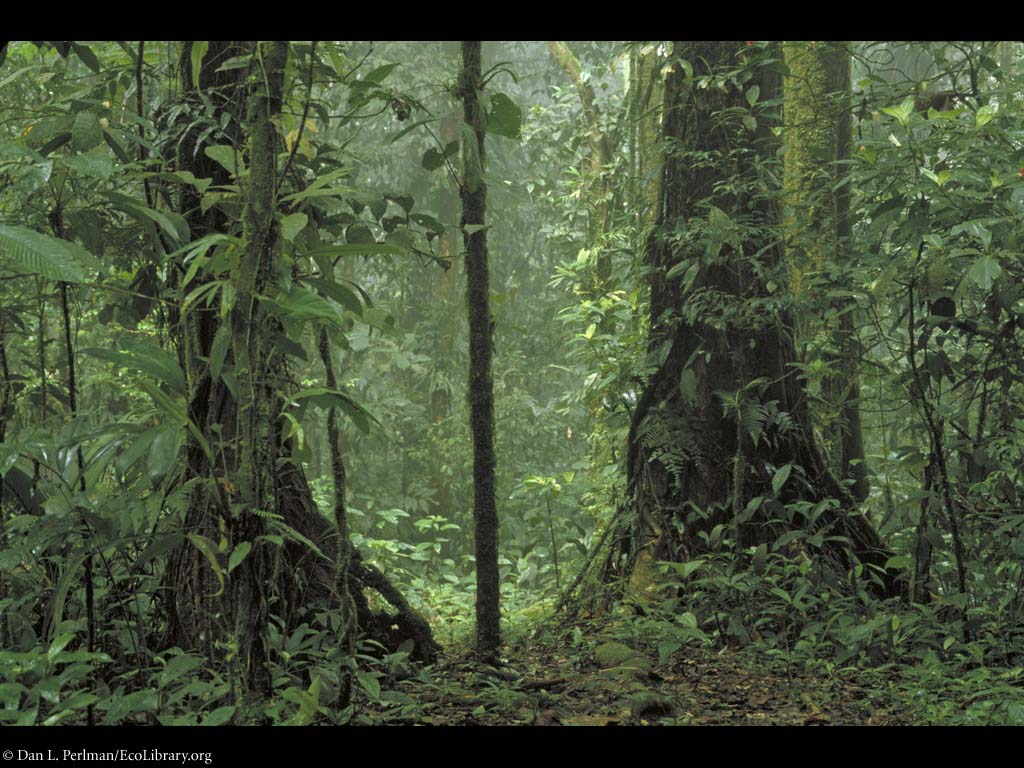
Between the years of 1940 and 1983, the forest cover in Costa Rica decreased from over 75% to less than 26% (1). This extensive deforestation is largely attributed to the human population growth, and therefore a heightened need for agricultural land. In order to provide humans with lumber, farmland, and pastureland, large companies began clearcutting large plots of land. This destruction and deforestation removes what little nutrients the soil had to begin with, thus limiting the ability for the soil to support other plant life and creating almost impossible conditions for regrowth (2). Since the soil loses nutrients so rapidly, the farming of cash crops such as coffee, sugar cane, and Africanized palm, needed to constantly take over and exploit more land. Furthermore, the removal of vegetation causes an increased soil erosion during rainfall and windy conditions. Through the creation of large plantations, irrigation systems, and the use of toxic pesticides, the land was damaged even more. Destruction of the tropical rainforest limits biodiversity and destroys the homes, therefore killing many plants and animals (3).
In the late 20th and early 21st century the protection and reforestation of the tropical rainforests in Costa Rica has increased dramatically. With the rise of environmentalism and the increase in effective government policy, forest cover has increased to 52% and continues to rise. With the realization that economic growth and ecologic stability go hand in hand, the government created policies and financial incentives for every hectare of land conserved.The Payment for Environmental Services Program (PES) provides money for those who own property containing tropical rainforest plant life, thus conserving it. Additionally there are many programs seeing to the reduction of carbon emissions, and therefore the acceleration of reforestation (4).
1) Blasiak, Robert. "Ethics and Environmentalism: Costa Rica's Lesson." Our World: Brought to You by United Nations University. 7 Dec. 2011. Web. 24 Nov. 2014.
2) Pine, Devera. "The Effects of Humans." Scholastic News: Rain Forest. Grolier Incorporated, 22 Apr. 2002. Web. 26 Nov. 2014.
3) "The Tropical Rainforest." Biomes of the World. Marietta College Department of Biology and Environmental Science, 1 Jan. 2007. Web. 25 Nov. 2014.
4) "Reforestation: The Easiest Way to Combat Climate Change." United Nations Department of Economic and Social Affairs. UN. Web. 23 Nov. 2014.
http://unu.edu/publications/articles/ethics-and-environmentalism-costa-ricas-lesson.html
http://www.marietta.edu/~biol/biomes/troprain.htm
http://teacher.scholastic.com/scholasticnews/indepth/rainforest/effects.asp
Subscribe to:
Posts (Atom)